

Romania is now getting serious about player protection — this looks set to be the most significant overhaul of the system in recent years. The National Gambling Office (ONJN) has just signed an agreement with the National Institute for Research and Development in Informatics (ICI București) to build a brand-new, unified self-exclusion platform. The headline feature: biometric identification combined with the ability to submit an application remotely, without needing to visit anywhere in person.
The whole initiative is designed to finally restore trust in the regulator, impose genuinely effective oversight across the entire market, and close off the growing problem of minors accessing gambling — something the public has been raising the alarm about for a long time.
Previously, self-exclusion was largely a paper exercise, full of loopholes and practical inconveniences. Now the plan is to make the process genuinely simple and watertight: scan your ID, pass biometric verification — and the ban takes effect instantly across every operator, both online and land-based. The project is being rolled out in stages, but it’s already clear that ONJN is determined to see it through to the end.
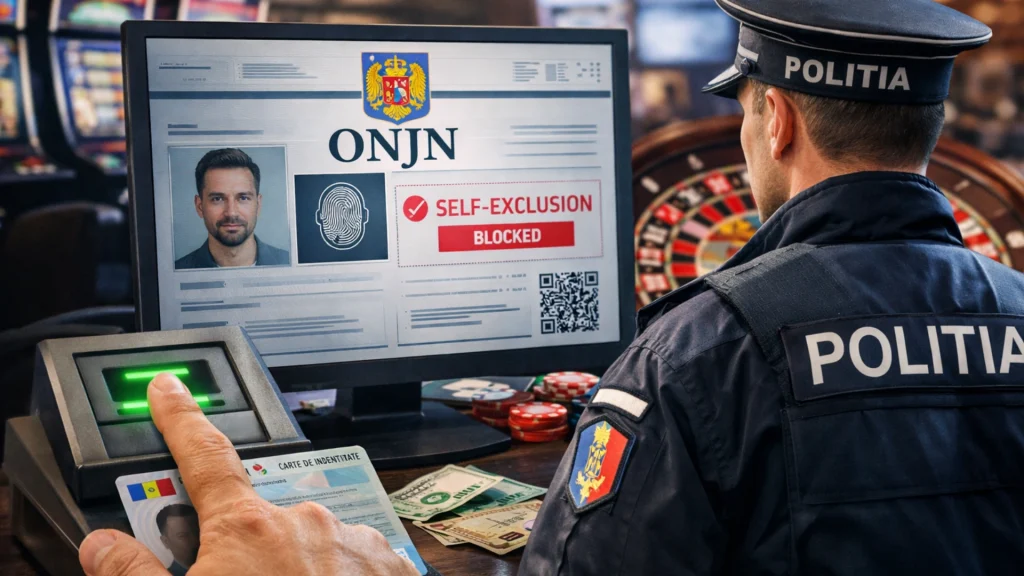
From Paper-Based to Digital Control
Officially, Romania has had a national self-exclusion system since 2020. In reality it remained full of vulnerabilities for years.
A player who self-excluded with one operator could very often simply move on to another. Exclusions were applied patchily, enforcement was decentralised, and the technical infrastructure was outdated. In 2025 the regulator formally introduced the principle of “one platform – one self-exclusion”, but without a centralised IT backbone it remained half a measure.
Now ONJN is going all-in on strict centralisation. The new system will operate on a clear model: one procedure, one national register, one point of control.
All self-exclusion data will sit directly under the regulator’s management. Operators will no longer be able to interpret or “process” applications in their own way. Exclusion must take effect immediately and apply universally across every licensed platform — both online and offline.
Biometrics Replacing Paperwork
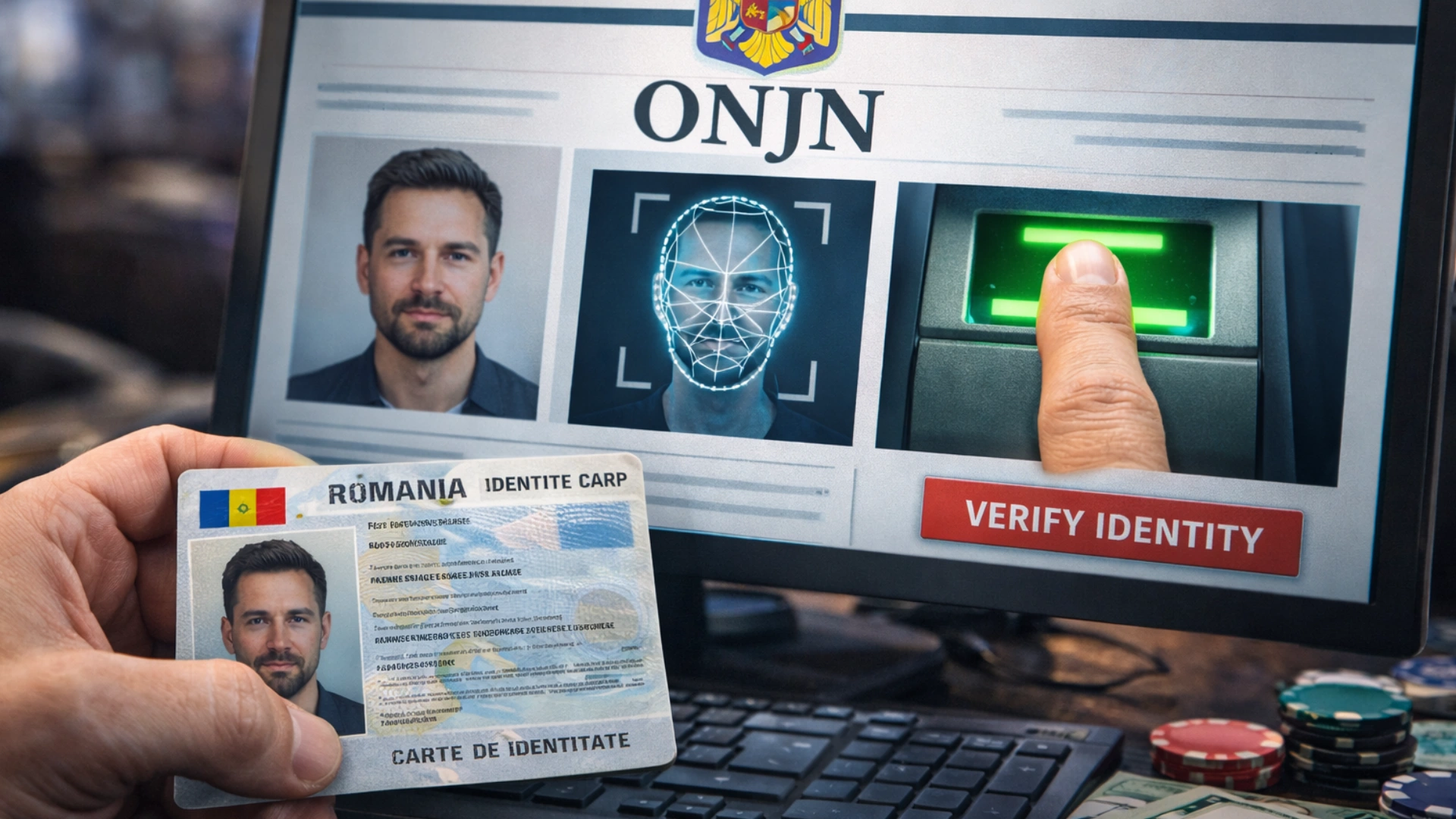
The biggest innovation is the ability to complete self-exclusion remotely. A player will be able to scan their identity document, undergo biometric verification, and confirm their identity via digital ID methods (including fingerprint checks).
This single change tackles two critical issues at once:
- It dramatically simplifies access to the self-exclusion procedure
- It eliminates the possibility of someone submitting an application “on behalf of” another person or using fake details
In practice, Romania is introducing one of the most technologically advanced self-exclusion formats in the region.
Harsher, Costlier, No Room for Impulsive Reversal
The draft emergency ordinance sent to the Ministry of Finance doesn’t just upgrade the system technically — it tightens the legal screws as well.
The proposed changes include:
- Fixed self-exclusion periods (up to and including permanent bans)
- A mandatory “cooling-off” period — no instant reversal of the decision will be possible
- Operators must refund any deposits made by a self-excluded player if they wrongly allow that player to gamble.
- Fines ranging from 50,000 to 100,000 lei (roughly €9,800–19,600)
- Suspension or outright revocation of the licence for repeated breaches
On top of that, ONJN will hand over some enforcement powers to the police — a clear signal that the regulator no longer intends to handle this alone.
Land-Based Sector Under Constant Video Surveillance
ONJN is now paying particularly close attention to physical venues — the area where oversight has always been trickiest.
Offline operators will have to:
- Implement player identification systems
- Install and keep operational CCTV cameras
- Store all verification logs and hand them over to the regulator on demand
If cameras go offline for any reason, it immediately triggers extra inspections plus heavy sanctions. In short, the authorities are systematically closing off every “grey zone”, especially in retail locations where it used to be far easier to slip under the radar.
QR Codes, Geolocation and Full Digital Monitoring at ONJN
At the same time, ONJN is rolling out several digital tools in parallel:
- A geolocation + QR-code system so anyone can instantly check whether the gaming machine in front of them is legal
- Automatic monitoring of all transactions and bonuses
- Fully electronic document flow between operators and ONJN
- A revamped, user-friendly portal for submitting complaints and requests
Another key development: a public fund of €5 million has been created. The money will go specifically towards prevention programmes for gambling addiction and support for treatment.
Why Now?
Civil society groups have been sounding the alarm at full volume: studies show that 20–24% of Romanian teenagers already display signs of problematic gambling behaviour. Save the Children Romania states outright: 14% of children have tried gambling for money, and a staggering 70% of them first learned about gambling through advertising.
Against this backdrop, the Senate has already approved several bills:
- Raising the minimum age for gambling participation from 18 to 21. Only those 21 and over will now be considered “participants”; under-21s are banned from venues and from placing any bets.
- Banning online gambling advertising from 06:00 to 24:00. In other words, almost the entire waking day and evening when children and teenagers are most active online.
- A complete prohibition on using celebrities, athletes, influencers or any public figures in gambling advertising campaigns. No more brand ambassadors from entertainment or sport
A Real Test for ONJN
ONJN President Vlad-Cristian Soare openly admits that the previous system was nowhere near effective enough. His stance is straightforward: self-exclusion must stop being a mere procedural formality and become a genuine barrier.
Romania could set a new benchmark for strict yet tech-driven gambling regulation across Europe. But if the IT infrastructure falters or the reforms stall, public trust in the regulator will take an even bigger hit.